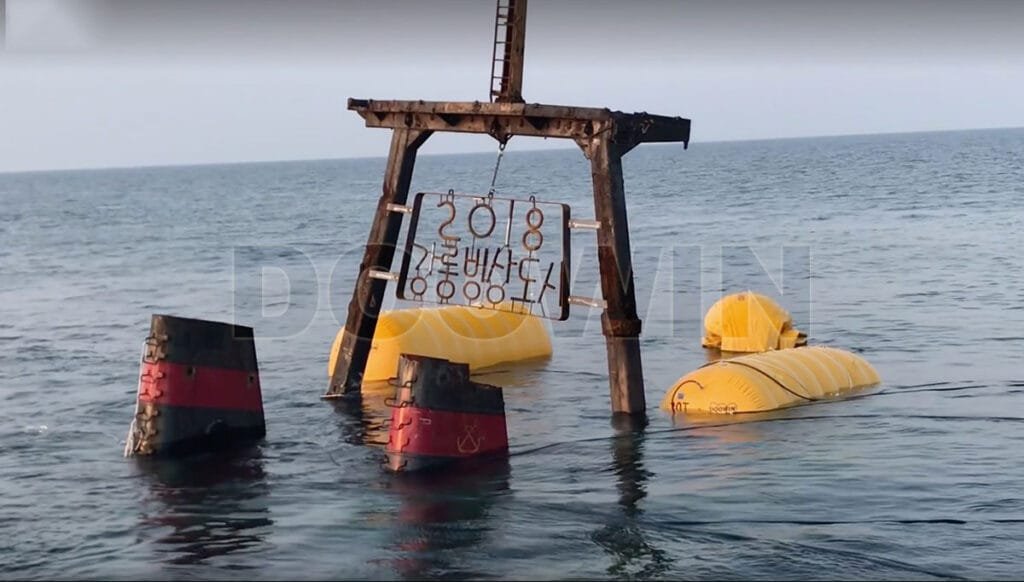
Ships Sink into the Sea, Reefs Rise with New Life.
One of our Korean customers successfully sank a decommissioned/old vessel onto the predetermined seabed with the help of our inflatable buoyancy units.
“Ship reefing is not simply dumping abandoned vessels into the ocean, but rather subjecting them to rigorous environmental risk assessment and ecological engineering modification to turn them into safe, stable, and efficient marine habitats. The internal compartment structure of a ship naturally possesses complex three-dimensional spaces that can quickly attract fish, shellfish, algae, and other fouling organisms to gather, forming a high-density micro‑ecosystem in a short period of time.”
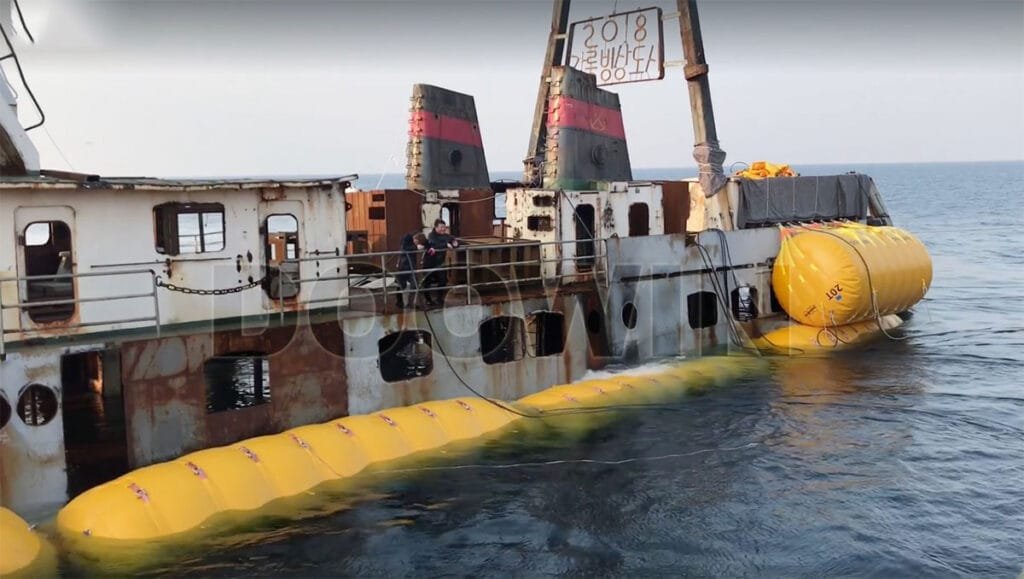
According to data provided by the project team, the ship deployed in this operation has a total length of 128 meters, a beam of 18 meters, and a gross tonnage of approximately 7,800 tons. After internal modifications, more than 80 holes and passages were added to the hull, creating a “refuge effect” similar to natural coral reefs. It is estimated that within six months after sinking, a biofilm and algae cover will initially form on the hull surface; within one to two years, it can attract economically valuable species such as groupers, seabreams, octopus, and sea urchins to settle, with local marine biomass expected to increase by three to five times.
Compared with traditional precast concrete reefs or the sinking of scrapped engineering vehicles, retired steel ships offer advantages such as larger reef scale, higher structural complexity, and relatively lower reef construction costs.